Avioyx: An Aviation OS for 33 Regulatory Frameworks
Pilots use a different app for every task. Avioyx combines flight planning, weather, logbooks, and scheduling into one OS for every major authority.

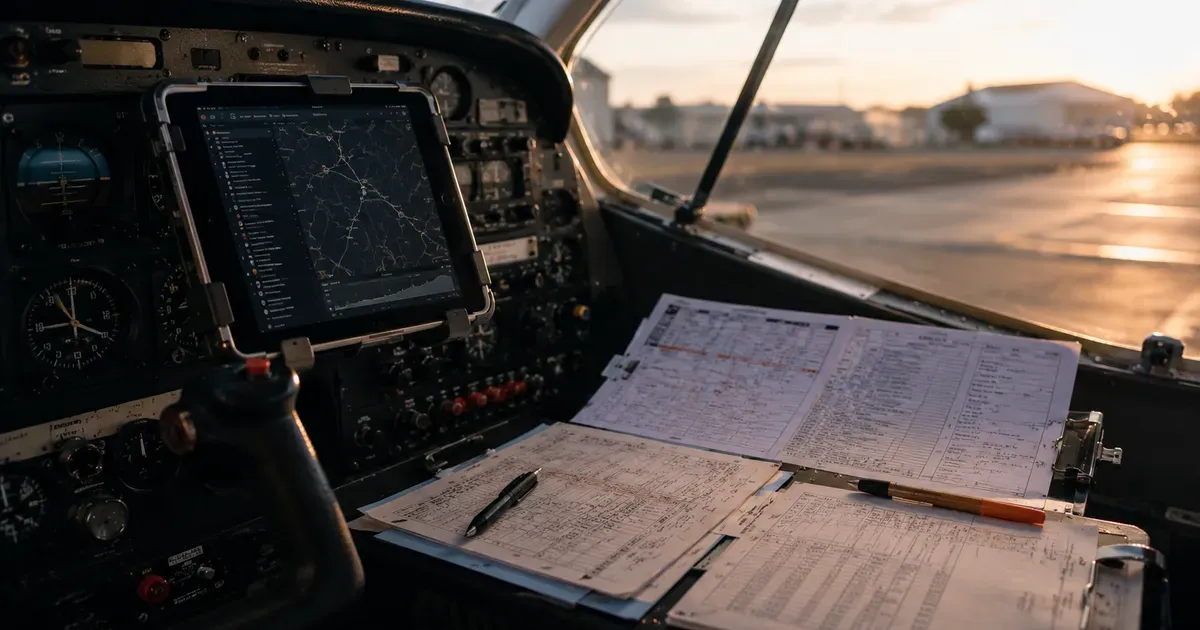
A typical pilot's iPad has twelve apps on it.
One for flight planning. One for weather. One for navigation charts. One for the logbook. One for weight and balance. One for NOTAMs. One for the flight school schedule. One for aircraft availability. One for fuel prices. One for filing flight plans. One for ADS-B traffic. One for document storage.
Twelve apps. Twelve logins. Twelve subscriptions. Twelve interfaces that don't talk to each other.
When I planned a flight at Aviation Infinity's partner schools, I watched instructors and students switch between apps constantly, copying data from the weather app into the planning app, manually entering the result into the logbook, then messaging the scheduling app to confirm aircraft availability. The same flight required touching four or five disconnected tools.
Avioyx is the product I wished existed when I was flying. An operating system for pilots that connects everything into one platform.
What an Aviation OS Means
The term "operating system" is deliberate. Avioyx isn't a feature-rich app. It's a platform that handles the entire workflow of flying, from before you get to the airport to after you've parked the aircraft.
Pre-flight: Weather briefing, NOTAM review, weight and balance calculation, fuel planning, route planning, flight plan filing. All in one interface, with data flowing automatically between steps. You don't enter the aircraft weight in three different places. You enter it once and every calculation uses it.
During flight: Electronic Flight Bag with navigation charts, moving map, ADS-B traffic, terrain awareness, and approach plates. The same flight plan you built pre-flight appears on the moving map. No re-entry. No switching apps.
Post-flight: Automatic logbook entry based on the flight you actually flew, with departure, arrival, flight time, and route populated automatically. Instructor endorsements. Student progress tracking.
Between flights: Aircraft scheduling and reservation. Instructor booking. Aircraft rental marketplace. Maintenance tracking. Document management for pilot certificates, medical certificates, and insurance.
For flight schools: Student management. Syllabus tracking. Ground school scheduling. Aircraft fleet management. Instructor assignment. Progress reporting for students and their parents. Billing and payments.
Each of these categories has existing standalone products. Some are good. But the value of an operating system isn't in any individual feature. It's in the connections between features.
The Multi-Authority Challenge (Again)
Avioyx inherits the same 33-authority challenge that defined Aviation Infinity, but at a deeper level.
Aviation Infinity deals with training content: questions, study material, exam formats. The regulatory differences affect what content is shown.
Avioyx deals with operational workflows: flight planning rules, airspace classifications, weather minima, equipment requirements, licensing privileges. The regulatory differences affect how the software behaves.
An EASA pilot planning a VFR flight has different weather minima than an FAA pilot. The minimum visibility, cloud clearance requirements, and airspace entry rules are different. Avioyx's flight planning engine needs to know which rules apply and validate the flight plan accordingly.
An aircraft registered in Germany has different maintenance intervals than one registered in Australia. Avioyx's maintenance tracking needs to understand the regulatory framework of the aircraft's registration country, not the pilot's license country.
A student pilot in the UK has different solo flight privileges than one in the US. Avioyx's scheduling system needs to check the student's license type and the relevant authority's rules before confirming a solo booking.
These aren't edge cases. They're the core product. An aviation OS that only works under one authority is a local app, not a platform.
The Marketplace Layer
Avioyx's most ambitious feature is the integrated marketplace.
Aircraft rental. Aircraft owners and FBOs list their aircraft with availability, pricing, insurance requirements, and checkout procedures. Pilots search by location, aircraft type, and date. Booking, payment, and insurance verification happen on-platform.
Instructor booking. Flight instructors list their availability, ratings, and hourly rates. Students search for instructors by location, language, and certification. The booking flow handles scheduling conflicts, payment processing, and post-lesson feedback.
Service marketplace. Aviation services (maintenance shops, fuel providers, tie-down facilities, examiner availability) listed with pricing and reviews. Pilots find what they need at unfamiliar airports without calling five phone numbers.
The marketplace layer transforms Avioyx from a tool into a network. Every pilot who uses the planning features contributes to the marketplace. Every marketplace transaction reinforces the planning features. The more people use Avioyx for flight planning, the more valuable the marketplace becomes, and vice versa.
Technical Architecture for Safety-Critical Software
Aviation software has higher reliability requirements than consumer software. When a pilot is using Avioyx at 10,000 feet, the app cannot crash, freeze, or display stale data.
Offline-first architecture. Charts, flight plans, and critical data are cached locally. If the cellular connection drops (which happens constantly at altitude), the app continues functioning with local data. Syncing happens when connectivity returns.
Real-time data validation. Weather data, NOTAMs, and airspace restrictions change hourly. The app validates data freshness and warns when information might be outdated. A six-hour-old weather briefing gets a warning. A 24-hour-old NOTAM status gets blocked until refreshed.
Redundant calculations. Critical calculations (weight and balance, fuel requirements, takeoff distance) use redundant calculation paths. If the primary calculation engine fails, the backup produces a result. If both disagree, the app shows both and alerts the pilot.
Audit trail. Every flight plan generated, every weather briefing viewed, every weight and balance calculation completed gets logged with timestamps. If an incident occurs, the data trail shows exactly what information the pilot had access to and when.
These requirements make development slower and more expensive. They also make the product trustworthy, which, in aviation, is the only feature that matters.
From Aviation Infinity to Avioyx
Aviation Infinity taught pilots. Avioyx serves pilots.
The relationship between the two products mirrors the journey every pilot takes, from student to professional. You use Aviation Infinity to study for your license. You use Avioyx to exercise that license.
The products share user accounts. A student who studied on Aviation Infinity can transition to Avioyx without re-registering. Their training records, certifications, and progress carry over. The flight school that used Aviation Infinity for ground school uses Avioyx for flight operations.
This is the benefit of building in an industry for over a decade. Each product in the aviation portfolio addresses a different stage of the pilot's journey, and they connect into a coherent experience that spans from the first day of ground school to the thousandth hour of flight time.
Enjoyed this article?
I write about building products, AI, aviation, and the journey of entrepreneurship. Follow along for more.
Keep reading

New Pilot Shop & Want To Be a Pilot: Niche Communities
I built an aviation e-commerce store and a pilot mentoring platform for tiny markets. Small communities with deep needs are more valuable than large, shallow ones.

Building for 33 Aviation Authorities Taught Me Regulated AI
Most AI startups avoid regulated industries. Here is what a decade inside aviation, legal, and healthcare taught me about building AI that must be right.

The Aviation Portfolio: How Five Products Serve One Industry
Inside the strategy behind building five complementary products for the aviation industry. Aviation Infinity, Avioyx, AvioSharing, New Pilot Shop, and Want To Be a Pilot.