Remote Product Development: Tools and Workflows That Work
I've been building products remotely across time zones for years. The tools matter less than the workflows that keep you productive.


Remote work wasn't new for me when 2020 made it mandatory for everyone else. I'd been building products remotely since I started, from Tijuana, San Diego, Rome, and wherever else life took me.
The sudden interest in remote work tools and practices in early 2020 prompted me to formalize what I'd been doing informally for years. Here's what actually works for remote product development as a solo founder.
The Environment
Remote work fails or succeeds based on environment, not tools.
Dedicated workspace. A desk that's only for work. When I sit there, I work. When I leave, I'm done. The physical boundary creates a mental boundary that "working from the couch" can't replicate.
Reliable internet. This sounds obvious. After working from locations with unreliable connections (some areas of Tijuana, rural Italy, hotel rooms with shared Wi-Fi), I've learned that internet reliability is non-negotiable. A hotspot as backup isn't optional; it's required equipment.
Time zone awareness. When I'm in Rome (GMT+1) and my users are mostly in Europe, the timezone alignment is easy. When I'm in San Diego (GMT-8), I need to plan communications and deployments around European business hours. Timezone awareness isn't about waking up early. It's about scheduling your high-impact actions when your users and systems are active.
The Workflow
Morning: plan. Before writing any code, I decide what I'm building today. Not a to-do list of twenty items, but one or two specific outcomes. "Finish the exam simulation feature" or "Deploy the billing update." Specificity prevents drift.
Deep work blocks: build. Two to four hours of uninterrupted building. No email, no messages, no context switches. This is when features get built, bugs get fixed, and progress happens. The quality of these blocks determines the quality of my output.
Afternoon: communicate and maintain. Respond to user emails. Review analytics. Update documentation. Deploy changes. These tasks are important but interruptible. They don't require deep focus.
Evening: learn. Read documentation, explore new tools, study domain knowledge. This investment time isn't productive today but compounds over weeks and months.
The Tools That Actually Matter
After years of remote work, the tools that make the biggest difference are surprisingly simple:
Git. Version control isn't just for teams. For a solo founder, Git is an undo button, a progress tracker, and a history of every decision. I commit frequently with descriptive messages. When something breaks, git diff and git log tell me what changed.
VS Code. The editor is the primary tool. Extensions for my stack (TypeScript, Tailwind, MongoDB), integrated terminal, and live share for the rare pair programming session.
A good terminal. Most of my deployment, database management, and system administration happens through the terminal. A well-configured shell with aliases, scripts, and tooling is more productive than any GUI.
Analytics dashboard. A single view showing key metrics across all products. Not a fancy BI tool, just a simple page that shows user counts, error rates, and revenue. The daily check takes two minutes and tells me if anything needs attention.
The tools that don't matter as much as people think: project management software (a text file works), communication platforms (email is fine for a solo founder), design tools (Tailwind eliminates most design tool needs).
What Remote Work Teaches You About Building
Remote work, especially as a solo founder, teaches product-relevant skills:
Written communication clarity. When you can't walk to someone's desk, every communication is written. This forces clarity, because if the message isn't clear in text, it isn't clear at all. This skill transfers directly to product writing: error messages, onboarding copy, documentation.
Self-management discipline. Nobody is watching. The discipline to focus, produce, and ship comes entirely from internal motivation and habit. This same discipline is what separates founders who ship from founders who plan.
Asynchronous thinking. Remote work teaches you to make decisions without real-time consultation. You can't ping a colleague for a quick opinion. You make the judgment call, document the reasoning, and move on. This decisiveness is essential for solo founders.
Building products remotely isn't harder than building them in an office. It's different. The skills it develops (clarity, discipline, independence) are exactly the skills that make solo founders effective.
Enjoyed this article?
I write about building products, AI, aviation, and the journey of entrepreneurship. Follow along for more.
Keep reading

Getting Started with Allem SDK: React Hooks for AI, Forms & Auth
Allem SDK is a collection of React hooks for AI chat, form validation, authentication, analytics, and utilities. Here is how to install and use it.

Getting Started with Allem UI: React & React Native Components
Allem UI is an accessible component library for React and React Native with 44+ components, dark mode, and Tailwind CSS v4. Here is how to install and use it.
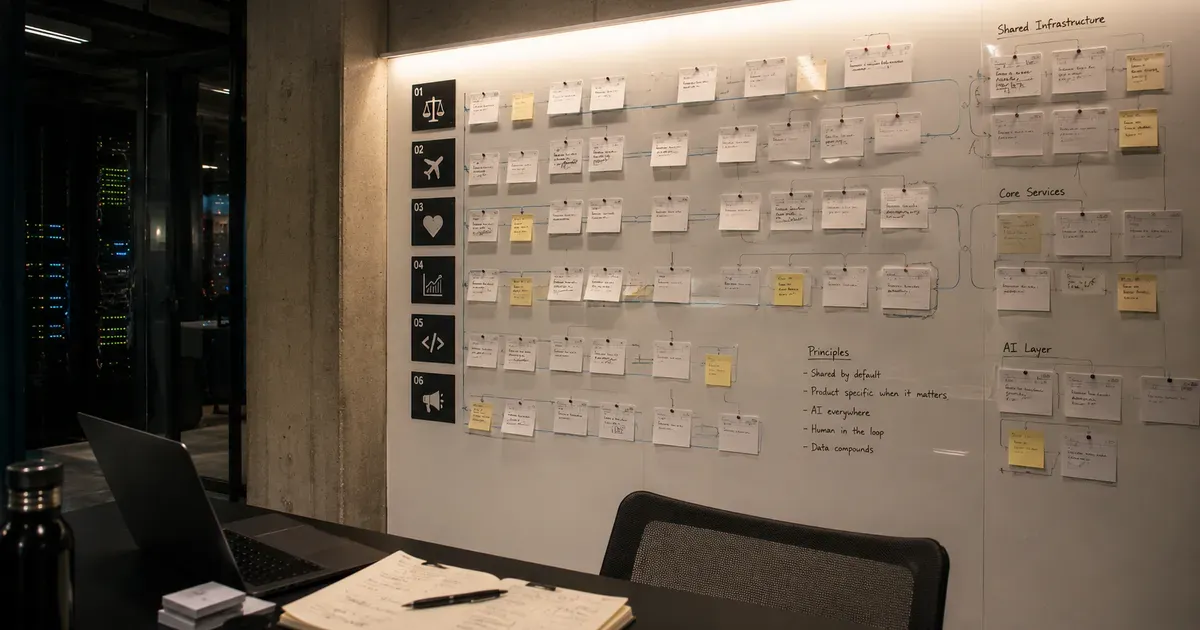
The Agento Suite: Building 6 AI Products in Parallel
In 2026, I launched six AI products across legal tech, travel, healthcare, and developer tools. Here is the architecture and playbook for building in parallel.