Surfyx: Building a Social Network for Surfers
Surfyx is my first product as a co-founder. Here is why I built a social network for surfers and what building for a passionate community taught me.

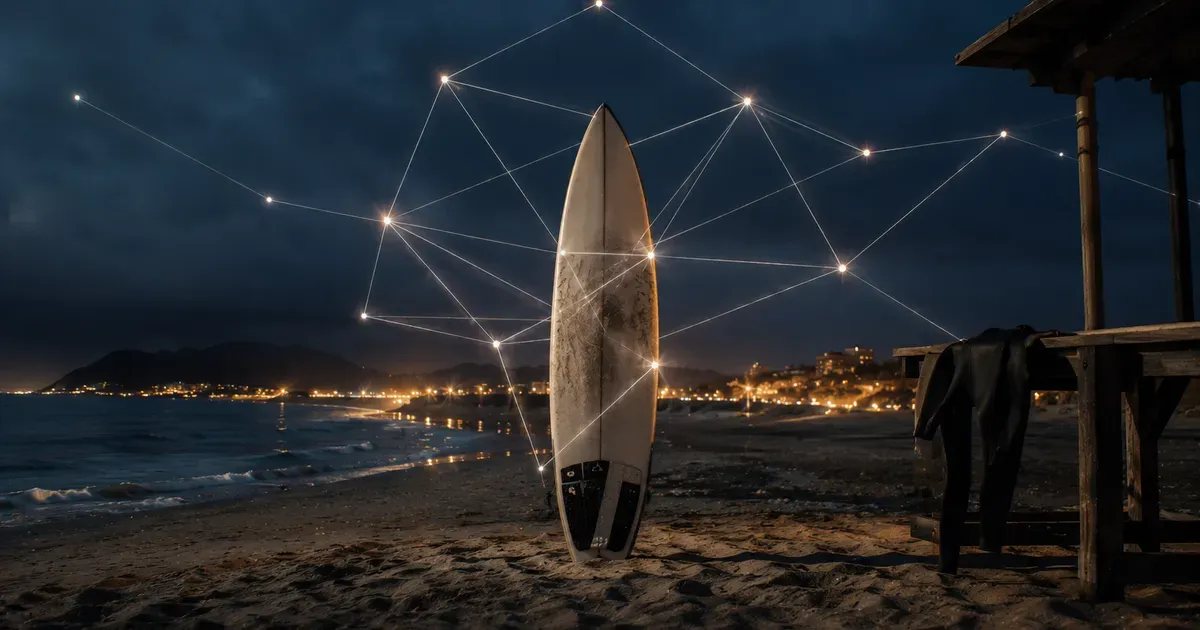
I am launching something different. After years of building products solo -- Aviation Infinity, ClickAi, Babonbo, and many more -- I am co-founding Surfyx, a social network built specifically for surfers. I am the Co-Founder and CTO, and this is the first time I've partnered with someone to build a product.
This post is about why Surfyx exists, how we're building it, and what I've already learned from the experience.
Why Surfing Needs Its Own Platform
You might think surfers are well-served by Instagram and Strava. They are not, and understanding why requires understanding surfing culture.
Surfing isn't like running or cycling, where performance is straightforward to measure. You don't surf a 5K in a personal best time. A great surf session is subjective -- the waves, the conditions, the feeling, the connection with the ocean. Strava's quantified approach doesn't capture this.
Instagram captures the visual beauty of surfing but not the context. A photo of someone riding a wave doesn't tell you the break name, the swell direction, the tide, the board they were riding, or how the session felt. It is performance without substance.
Surfers want a place to log sessions with meaningful detail. They want to track their progression over time. They want to discover new breaks. They want to connect with other surfers who ride the same spots. And they want to do all of this in a space that respects the culture -- no influencer dynamics, no vanity metrics, no algorithmic feeds designed to maximize engagement at the expense of authenticity.
That is Surfyx.
The Product Vision
Surfyx has three core features at launch:
Session Logging
After a surf session, you log it on Surfyx. You record the break, the conditions (swell height, wind, tide), the board you rode, a description of how the session went, and optionally photos or video. The session becomes a permanent record in your surf journal.
Over time, your session history paints a picture of your surfing life. Where you surf, how often, how conditions affect your experience, how you're progressing. This is data that doesn't exist anywhere else in a structured format.
Break Discovery
Surfyx has a database of surf breaks worldwide. Each break has conditions data, session logs from community members, photos, and local knowledge contributed by surfers who know the spot. This isn't a surf forecast site -- it's a community-curated guide to surf breaks.
The discovery feature helps surfers find new spots based on their preferences: wave type, crowd level, difficulty, proximity. Planning a surf trip becomes easier when you can see real session logs from other surfers at potential destinations.
Community
Surfyx connects surfers who share spots. You can follow other surfers, see their sessions, and discover new breaks through their activity. The feed is chronological -- no algorithm deciding what you see. This is a deliberate design choice. Algorithmic feeds optimize for engagement, which in practice means optimizing for outrage, controversy, and addictive patterns. A chronological feed respects the user's time and attention.
The Tech Stack
Surfyx is built on the same stack I use for everything: Next.js with App Router, TypeScript, Tailwind CSS, and MongoDB. Deployed on Vercel.
I chose this stack not because it's the trendiest but because I know it deeply. When you're building a new product, the last thing you want is to be debugging framework issues. I want to be solving product problems, not technology problems. Using a stack I've used across many other products lets me move fast with confidence.
The one new technology I am exploring for Surfyx is real-time data. The community feed and session activity need to feel alive. I am using server-sent events for real-time updates rather than WebSockets because SSE is simpler, works through proxies and load balancers more reliably, and Next.js API routes support it natively.
Building With a Co-Founder
This is the part I want to be most honest about. Building Surfyx with a co-founder is a fundamentally different experience from building solo, and the adjustment has been significant.
The Good. Having a co-founder who handles product vision and community building while I focus on technical execution is genuinely liberating. For the first time, I am not context-switching between code, marketing, customer support, and business development. I can go deep on technical problems knowing that the product and community side is covered. The quality of my technical work has improved because of this focus.
The Challenging. I've been making every product decision alone for years. Suddenly needing to align with someone else on feature priorities, design decisions, and roadmap is an adjustment. Not because we disagree often -- we actually align well on most things -- but because the process of reaching alignment takes time. Solo, I decide and execute. Together, we discuss, align, then execute. The output is usually better, but the latency is higher.
The Surprising. The most surprising thing about having a co-founder is how much it has changed my relationship with the product. When I build solo, the product is an extension of me. Its success is my success. Its failure is my failure. With a co-founder, the product becomes something separate -- something we both care about but neither fully owns. This emotional distance is actually healthy. I make more rational decisions about Surfyx than I do about my solo products.
Building for a Passionate Community
Surfers are a passionate, opinionated community. Building for them has unique dynamics.
Authenticity matters above all else. Surfers have a finely tuned sense for things that aren't genuine. If Surfyx felt like it was built by non-surfers trying to monetize surfing culture, the community would reject it instantly. Every design decision, every piece of copy, every feature reflects genuine understanding of surfing culture. This isn't a marketing strategy. It is a prerequisite for survival.
Localism is real. Surfing has a long tradition of localism -- regulars at a break feeling ownership over "their" spot. A social network that casually broadcasts the locations of secret breaks would face intense backlash. We have thought carefully about privacy controls for break locations. Users can log sessions at private breaks without making the location public. This is a feature born from cultural understanding, not user research.
Simplicity is respected. Surfing attracts people who value simplicity -- being in nature, disconnecting from screens, finding flow. Surfyx needs to respect this by being simple, fast, and non-addictive. No infinite scroll. No notification spam. No dark patterns. The app should enhance the surfing experience, not compete with it for attention.
What Comes Next
Surfyx is in early access as I write this. The initial community is small but engaged. Session logging is the most-used feature, which validates our hypothesis that surfers want a structured way to record their sessions.
The roadmap is focused on depth over breadth. Rather than adding more features, we're deepening the existing ones. Better session analytics. Richer break profiles. More meaningful connections between surfers.
I don't know if Surfyx will become a large platform. Social networks are notoriously hard to build. The cold start problem is real -- a social network isn't useful until enough of your friends are on it. But surfing communities are tight-knit and geographic. If we can become the default platform at a few popular breaks, the network effects should take care of the rest.
What I do know is that building Surfyx has stretched me in new ways. New partnership dynamics, new community-building challenges, new technical problems around real-time data and social features. Many years into building products, it's refreshing to feel like a beginner again.
Enjoyed this article?
I write about building products, AI, aviation, and the journey of entrepreneurship. Follow along for more.
Keep reading

Surfyx: What Building a Surf App Taught Me About Distribution
Surfyx is a surf tracking app and social network. Building it taught me that distribution, not features, determines whether a product succeeds in a niche market.

How I Use AI to Run a One-Person Product Studio
I maintain ~20 products solo. AI is not replacing my work, it is multiplying it. Here is how I use Claude and AI tooling to operate at impossible scale.
Building Software for Lawyers: UX Lessons from a Non-Lawyer
What I learned about designing legal software as someone who has never practiced law, and why outsider perspective might actually be an advantage.