Aviation Post-COVID: How the Training Market Transformed
The aviation training industry emerged from COVID fundamentally changed. Here's what I saw from inside the market and how it shaped my products.

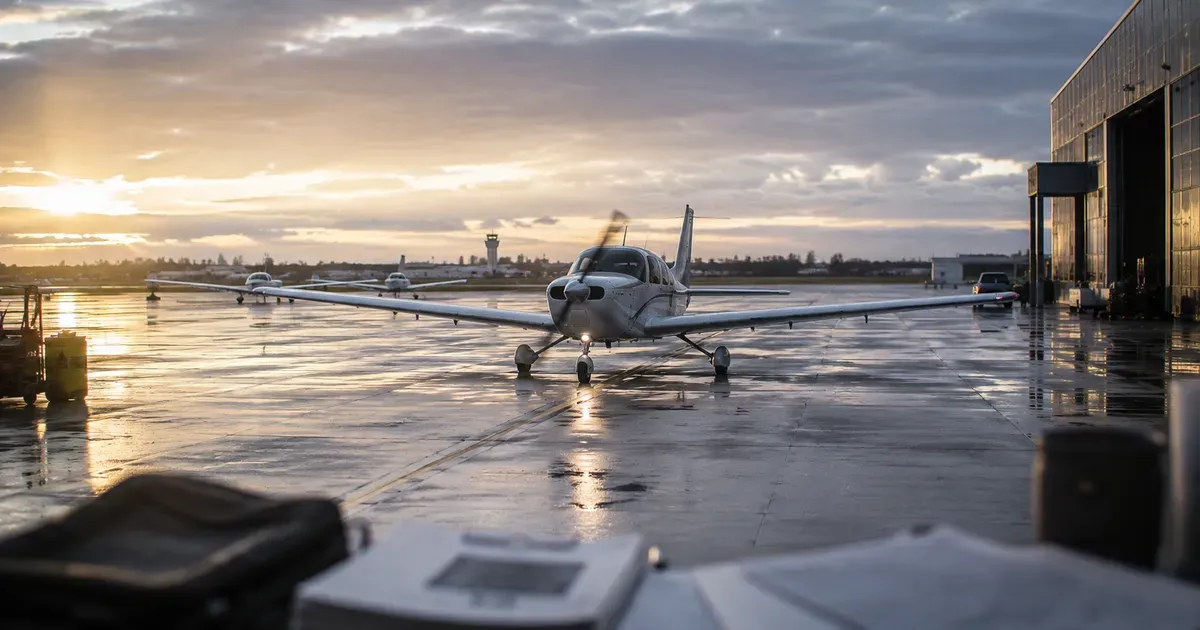
Two years after COVID grounded most of the aviation industry, we're finally seeing the full picture of how the training market has changed. Running Aviation Infinity through the pandemic and out the other side gave me a front-row seat to one of the most dramatic transformations in aviation education history.
The World Before
Before COVID, aviation training was overwhelmingly in-person. Flight schools operated on a model that hadn't fundamentally changed in decades: students showed up, attended ground school classes, and flew with instructors. Digital resources existed, but they were supplementary. The real learning happened in classrooms and cockpits.
Aviation Infinity was already challenging that model. We'd built an online exam preparation platform that was growing steadily, but the broader industry still viewed digital training with skepticism. Many flight school owners I spoke with would say things like, "You can't learn to fly from a screen." They weren't wrong about the flying part, but they were wrong about everything else.
What COVID Changed
When lockdowns hit in early 2020, the aviation training industry faced an existential crisis. Flight schools closed. Classroom ground school stopped. Students who were mid-training suddenly had no way to continue their theoretical education.
The immediate effect was a surge in demand for online resources. Aviation Infinity saw traffic increase by over 300% in the first two months of lockdown. Students who had never considered online exam prep were suddenly desperate for it. Flight schools that had refused to acknowledge digital learning were now recommending our platform to their students.
But the real transformation wasn't the temporary spike in demand. It was the permanent shift in how people thought about aviation training.
The Permanent Shifts
By early 2022, several changes have become clearly permanent rather than temporary.
The first is the acceptance of hybrid training. Flight schools have broadly accepted that theoretical knowledge instruction works well online, while practical flying obviously requires in-person training. This hybrid model is now the norm, not the exception. Students expect to have access to online study materials, practice exams, and progress tracking. Schools that don't offer this look outdated.
The second shift is the geographic expansion of the student base. Before COVID, most aviation training was local. Students attended the nearest flight school. Now, students are much more willing to do their theoretical preparation online and travel for intensive practical training blocks. This has been enormous for Aviation Infinity because it means students in countries without strong local training resources can access quality exam preparation.
The third change is the age and background of new students. The pandemic prompted many people to reconsider their careers. We've seen a significant increase in career changers, people in their 30s and 40s who are entering aviation training for the first time. These students are more digitally native in their learning habits and more demanding of good user experience in educational tools.
How This Shaped Aviation Infinity
These shifts forced me to rethink Aviation Infinity's product strategy fundamentally.
Before COVID, the platform was primarily an exam question bank. Students would come, practice questions, and leave. The value proposition was simple: we had a comprehensive database of exam-relevant questions with clear explanations.
Post-COVID, students expected more. They wanted structured study plans that could replace classroom ground school. They wanted progress tracking that showed them not just how many questions they'd answered but how ready they were for the exam. They wanted the platform to adapt to their learning pace and knowledge gaps.
I spent most of 2021 rebuilding the platform to deliver these features. The question bank was still the core, but it was now wrapped in a learning management layer that provided structure, tracking, and personalization. This wasn't a pivot; it was an evolution driven by a market that had permanently raised its expectations.
The Flight School Relationship
One of the most interesting post-COVID dynamics has been the changing relationship between online platforms like Aviation Infinity and traditional flight schools.
Before the pandemic, there was tension. Flight schools saw us as competition, or at best, as an irrelevant sideshow. During COVID, we became essential partners. Schools would direct their students to our platform because they had no alternative for theoretical instruction.
Now, we've settled into a collaborative model that I think serves students better than either approach alone. Flight schools focus on what they do best: practical flight training, simulator sessions, and personalized mentorship. Platforms like Aviation Infinity handle what we do best: scalable, interactive theoretical knowledge preparation with immediate feedback and adaptive learning.
This isn't just a business relationship. It's a better educational model. Students get the best of both worlds. And from a product perspective, it means Aviation Infinity can focus on excellence in digital learning rather than trying to be a complete flight school.
The Data Advantage
Running an educational platform through a market transformation gives you something incredibly valuable: data.
I can see exactly which topics students struggle with most, how study patterns correlate with exam pass rates, which question types are most effective for learning versus assessment, and how different student demographics approach the material differently.
This data is now shaping every product decision I make. When I see that students consistently struggle with meteorology questions related to icing conditions, I don't just add more questions. I analyze the explanation quality, the question sequencing, and the prerequisite knowledge structure to understand why that topic is difficult and how the platform can better address it.
Before COVID, I didn't have enough data to do this kind of analysis. The volume was too low and the user behavior too limited. Now, with tens of thousands of students actively using the platform, every interaction is a signal that helps improve the learning experience.
What's Coming Next
Looking ahead from early 2022, I see several trends that will continue reshaping aviation training.
AI-assisted learning is going to become standard. Not replacing instructors, but providing personalized feedback and adaptive question selection that no static question bank can match. I'm already exploring how to integrate this into Aviation Infinity.
Video content will complement text-based learning. Students increasingly expect visual explanations, especially for complex topics like aerodynamics and navigation. The platforms that combine good video content with interactive practice will win.
Mobile-first design will become non-negotiable. More and more students are studying on their phones during commutes, breaks, and downtime. The platforms that provide a genuinely good mobile experience will capture the majority of study time.
The Bigger Lesson
The post-COVID transformation of aviation training taught me something that applies far beyond aviation: crises accelerate existing trends. Digital learning, hybrid training, geographic flexibility, these weren't new ideas. They were ideas that the industry had been resisting for years. COVID didn't create the demand; it removed the resistance.
As a product builder, this is a crucial insight. When you're building something that the market "isn't ready for," the question isn't whether the market will ever be ready. It's what catalyst will break through the resistance. Sometimes that catalyst is a global pandemic. Sometimes it's a new technology. Sometimes it's just time.
The products that survive and thrive are the ones that are already built and ready when the resistance breaks. Aviation Infinity was positioned to capture the post-COVID shift because it already existed, already worked, and already had a user base. If I'd waited until the market was "ready" to start building, I'd have been years too late.
Build for the future you believe in, and be patient enough to wait for the world to catch up.
Enjoyed this article?
I write about building products, AI, aviation, and the journey of entrepreneurship. Follow along for more.
Keep reading

New Pilot Shop & Want To Be a Pilot: Niche Communities
I built an aviation e-commerce store and a pilot mentoring platform for tiny markets. Small communities with deep needs are more valuable than large, shallow ones.

Building for 33 Aviation Authorities Taught Me Regulated AI
Most AI startups avoid regulated industries. Here is what a decade inside aviation, legal, and healthcare taught me about building AI that must be right.

The Aviation Portfolio: How Five Products Serve One Industry
Inside the strategy behind building five complementary products for the aviation industry. Aviation Infinity, Avioyx, AvioSharing, New Pilot Shop, and Want To Be a Pilot.