Risely: When a Product Finds Its Market by Accident
The story of how Risely stumbled into product-market fit through an audience I never designed for, and what it taught me about building with loose hands.

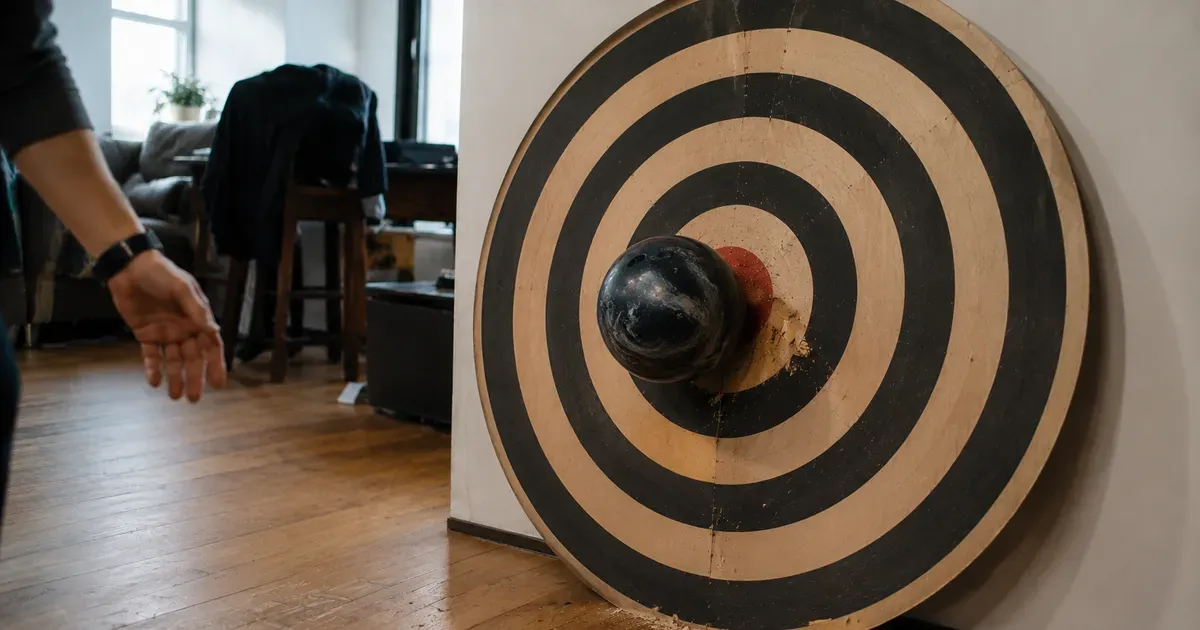
Every product founder has a story about the product that did exactly what they planned. The careful research, the validated hypothesis, the target audience that responded exactly as predicted. This isn't that story.
Risely found its market by accident. The audience I built it for was not the audience that showed up. The features I thought were differentiators were not the ones people cared about. And the use case that drives most of Risely's engagement today was not one I ever designed for.
This is the most valuable product lesson I've learned in 18 years of building.
The Original Vision
Risely started with a specific thesis and a specific target user. I'd a clear picture of who would use it, how they would use it, and why they would pay for it. I built the features that served that vision, designed the UX for that user, and wrote the marketing copy for that audience.
I was wrong about almost all of it.
The first three months after launch were discouraging. The target audience trickled in, tried the product, and left. Engagement metrics were flat. The features I'd spent months building were used sparingly. I started mentally preparing the post-mortem.
The Signal I Almost Missed
Then something unexpected happened. I noticed a small but growing cluster of users who were not in my target audience at all. They were using the product, but in a way I'd not anticipated. They were spending more time on features I considered secondary, ignoring the core features I'd built the product around, and returning regularly.
My first instinct was to treat this as noise. These are not my target users, I thought. They are using the product wrong.
That instinct was itself wrong, and catching it was the turning point.
I reached out to a few of these unexpected users and asked them why they were using Risely and what they liked about it. Their answers surprised me. They had found a genuine use case that my product served well, not because I designed it to, but because the underlying infrastructure happened to support their workflow.
The Pivot That Was Not Really a Pivot
What followed was not a dramatic pivot. I didn't tear down the product and rebuild it. Instead, I made a series of small adjustments that optimized for the audience that had actually shown up:
- I improved the features these users were gravitating toward
- I adjusted the onboarding to match their use case
- I rewrote the landing page to speak their language
- I de-emphasized features they didn't use
Each change was small. Collectively, they transformed the product's trajectory. Engagement went up. Retention improved. Word-of-mouth started working because users were recommending the product for the use case that actually resonated, not the one I'd originally marketed.
What I Learned
1. Watch What Users Do, Not What You Expect
Analytics are more honest than vision. I'd a compelling thesis about what Risely should be, but the data told a different story. The users who stuck around were not the ones I predicted. If I'd not been paying attention to the actual usage patterns, I would have missed the signal entirely.
I now instrument every product heavily from day one. Not just page views and sign-ups, but feature-level engagement, session patterns, and retention cohorts. The data doesn't tell you what to build, but it tells you who is showing up and what they care about.
2. Build with Loose Hands
This phrase has become one of my core product principles. Build with loose hands. Design your product with a clear vision, but hold that vision loosely enough that you can follow the market when it pulls you in an unexpected direction.
The opposite of loose hands is white-knuckling your original thesis. Continuing to market to an audience that isn't responding while ignoring the audience that is. I've seen founders do this for years, watching their metrics flatline while insisting that they just need to find the right marketing channel for their original target.
Sometimes the right marketing channel is the audience that already found you on their own.
3. The Infrastructure Matters More Than the Features
Risely's accidental product-market fit happened because the underlying infrastructure (the data models, the API design, the core architecture) was flexible enough to support a use case I'd not designed for. If I'd built a rigid product that only worked for my original vision, the unexpected users would not have been able to bend it to their needs.
This reinforced something I already believed from building multiple products: invest disproportionately in solid, flexible infrastructure. Features can be added, removed, or pivoted. Infrastructure determines what is possible.
4. Speed of Iteration Trumps Quality of Prediction
I could have spent six more months researching Risely's market before building. I could have done more user interviews, more competitive analysis, more validation. But the insight that actually drove Risely's success (the unexpected user segment) could not have been discovered through pre-launch research. It only became visible through real usage of a real product.
This isn't an argument against research. I research extensively before building (my research phases are typically months long). But it's an argument for launching early, watching carefully, and iterating fast. The market will teach you things that no amount of pre-launch research can.
5. Accidental PMF Is Still Real PMF
There is a tendency to think that product-market fit found by accident is somehow less legitimate than PMF found through deliberate strategy. It's not. The users don't care how you found them. They care whether the product solves their problem.
Risely serves a real audience with a real need. The fact that I discovered that audience by accident rather than design is irrelevant to the users. It's a lesson in humility for me, but it's genuine value for them.
The Broader Pattern
Looking back across my portfolio, Risely isn't the only product where the market surprised me. Several of my aviation products found users I didn't expect, in geographies I didn't target, with use cases I didn't design for.
The products that survived and grew were the ones where I followed the signal. The ones that stalled were the ones where I stubbornly insisted on the original vision.
Building products is an exercise in balancing conviction and flexibility. You need enough conviction to ship something, to make choices, take positions, and build for a specific user. But you need enough flexibility to let the market redirect you when it knows something you do not.
Risely taught me that balance. It's the product I am most proud of, precisely because it succeeded on its own terms rather than mine.
Enjoyed this article?
I write about building products, AI, aviation, and the journey of entrepreneurship. Follow along for more.
Keep reading

Surfyx: What Building a Surf App Taught Me About Distribution
Surfyx is a surf tracking app and social network. Building it taught me that distribution, not features, determines whether a product succeeds in a niche market.

How I Use AI to Run a One-Person Product Studio
I maintain ~20 products solo. AI is not replacing my work, it is multiplying it. Here is how I use Claude and AI tooling to operate at impossible scale.
Building Software for Lawyers: UX Lessons from a Non-Lawyer
What I learned about designing legal software as someone who has never practiced law, and why outsider perspective might actually be an advantage.