Going Serverless: How I Eliminated Server Management in 2020
Going serverless with Vercel and MongoDB Atlas eliminated an entire category of work. Here's how I ditched SSH and nginx for good.


For my first two years of building, I deployed applications on VPS instances. DigitalOcean droplets. Manual server setup: install Node.js, configure nginx as a reverse proxy, set up PM2 for process management, configure SSL with Let's Encrypt, manage firewall rules.
The setup worked. The maintenance was a full-time job I didn't have time for.
Every server needed security patches. Every nginx configuration needed updating when routes changed. Every deployment required SSH-ing in, pulling the latest code, rebuilding, and restarting processes. If a server went down at 3 AM, I was the only person who could fix it.
Going serverless (Vercel for compute, MongoDB Atlas for database, AWS S3 for storage) eliminated an entire category of work. Not reduced. Eliminated.
What "Serverless" Actually Means
Serverless doesn't mean no servers. It means no servers I manage. The servers exist (Vercel runs them, Atlas runs them), but the configuration, scaling, patching, and monitoring are handled by the platform.
For my products, serverless means:
Vercel handles compute. Push code to Git. Vercel builds the application, deploys it to a global CDN, routes traffic, manages SSL, and scales automatically. I don't think about server capacity, load balancers, or geographic distribution.
MongoDB Atlas handles data. Automated backups, point-in-time recovery, automatic scaling, security patches, monitoring, and alerts. I write queries. Atlas handles everything else.
No ops overhead. No SSH. No server monitoring. No capacity planning. No security patch tracking. No disk space management. The operational overhead that consumed 20-30% of my time disappeared.
The Economics
Serverless platforms are more expensive per-request than self-managed servers at scale. For my products (moderate traffic, distributed globally, with spiky usage patterns), serverless is cheaper.
The math: a $20/month VPS can handle steady traffic efficiently. But it's always running, even when nobody's using it. At 3 AM, the server idles. During a traffic spike from a social media mention, the server struggles.
Serverless pricing scales with usage. At 3 AM, the cost is near zero. During a spike, capacity scales automatically and the cost increases proportionally. For products with uneven traffic (which is most products), the pay-per-use model is more efficient.
But the real economics aren't in hosting costs. They're in time costs. The hours I don't spend on server management are hours I spend building features. For a solo founder, time is the scarcest resource. Anything that converts ops time into building time has massive ROI.
The Tradeoffs
Vendor lock-in. Vercel-specific features (preview deployments, edge functions, analytics integration) create dependency. Moving off Vercel would require adapting deployment workflows. I accept this tradeoff because Vercel's execution is consistently excellent.
Cold starts. Serverless functions have cold start latency, meaning the first request after an idle period takes longer. For most web applications, this is imperceptible. For real-time features, it can be noticeable.
Limited customization. Self-managed servers offer unlimited customization. Serverless platforms offer the customization they've built. For standard web applications, the available customization is more than sufficient. For unusual requirements, the constraints can be limiting.
Debugging complexity. When something goes wrong on a self-managed server, I can SSH in and investigate directly. On serverless, debugging happens through logs, metrics, and the platform's tooling. The debugging surface is more abstract.
These tradeoffs are worthwhile for my use case. The time saved on operations exceeds the cost of vendor dependency and debugging abstraction.
The Recommendation
If you're a solo founder or small team managing servers manually, stop. Use Vercel, Railway, Fly.io, or any managed platform that eliminates ops overhead. The time you recover is your most valuable resource.
Server management is a skill. It's also a distraction from building products. Unless your product's differentiation requires custom infrastructure, the managed platforms are the right choice.
I haven't SSH'd into a production server in years. My products are more reliable than when I managed servers myself. The conclusion is clear: for product builders, serverless isn't a trend. It's an obvious improvement.
Enjoyed this article?
I write about building products, AI, aviation, and the journey of entrepreneurship. Follow along for more.
Keep reading

Getting Started with Allem SDK: React Hooks for AI, Forms & Auth
Allem SDK is a collection of React hooks for AI chat, form validation, authentication, analytics, and utilities. Here is how to install and use it.

Getting Started with Allem UI: React & React Native Components
Allem UI is an accessible component library for React and React Native with 44+ components, dark mode, and Tailwind CSS v4. Here is how to install and use it.
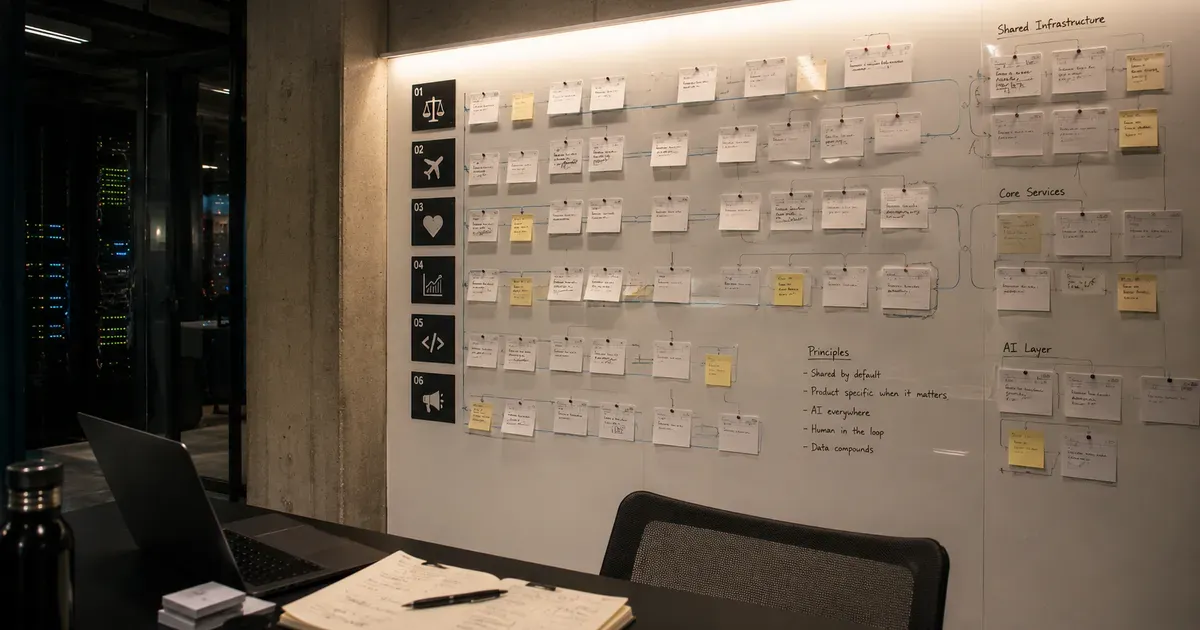
The Agento Suite: Building 6 AI Products in Parallel
In 2026, I launched six AI products across legal tech, travel, healthcare, and developer tools. Here is the architecture and playbook for building in parallel.