Kirjoitan tuotteiden rakentamisesta, tekoälystä, ilmailusta ja yrittäjyyden matkasta.
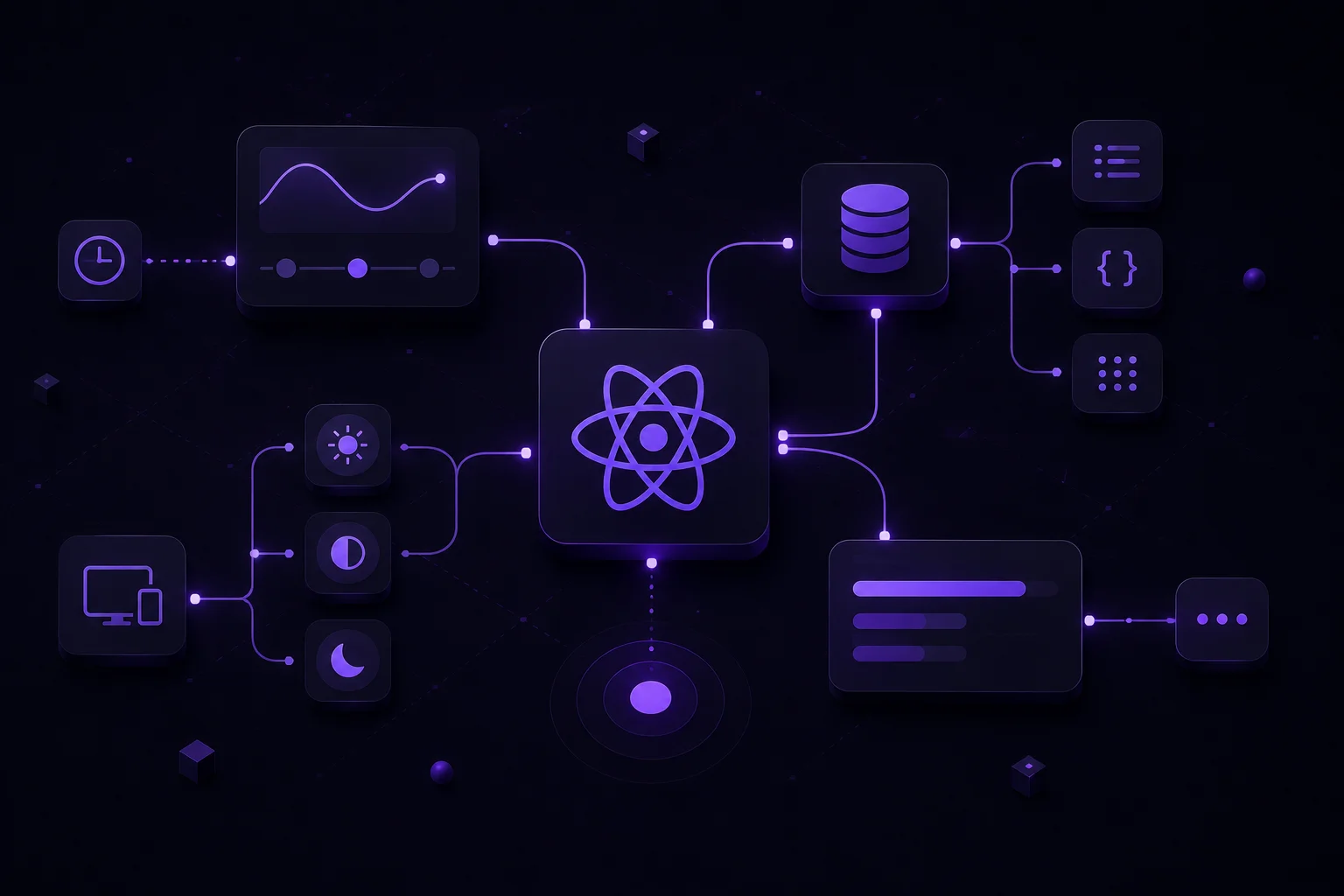
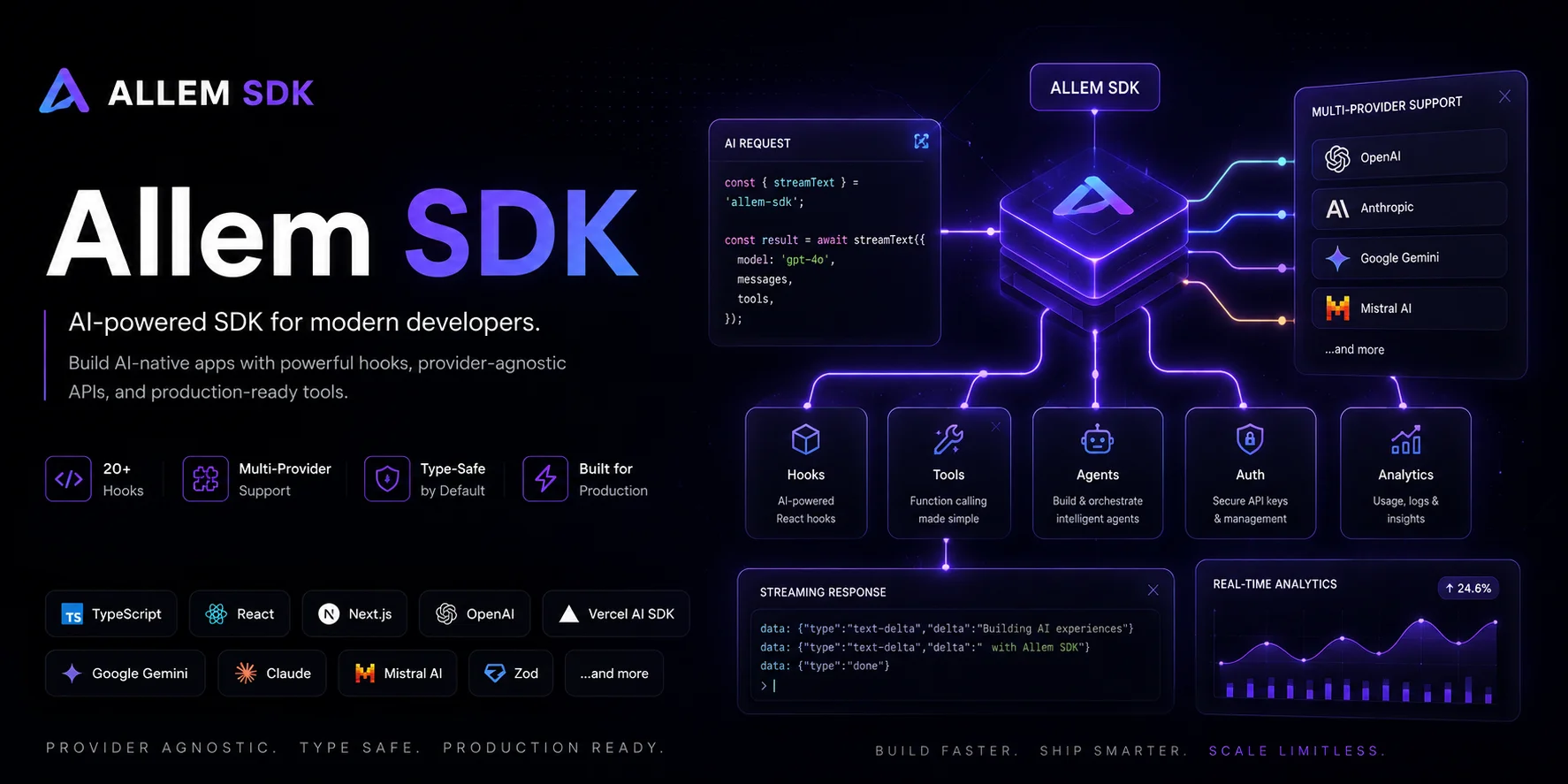
Allem SDK is a collection of React hooks for AI chat, form validation, authentication, analytics, and utilities. Here is how to install and use it.
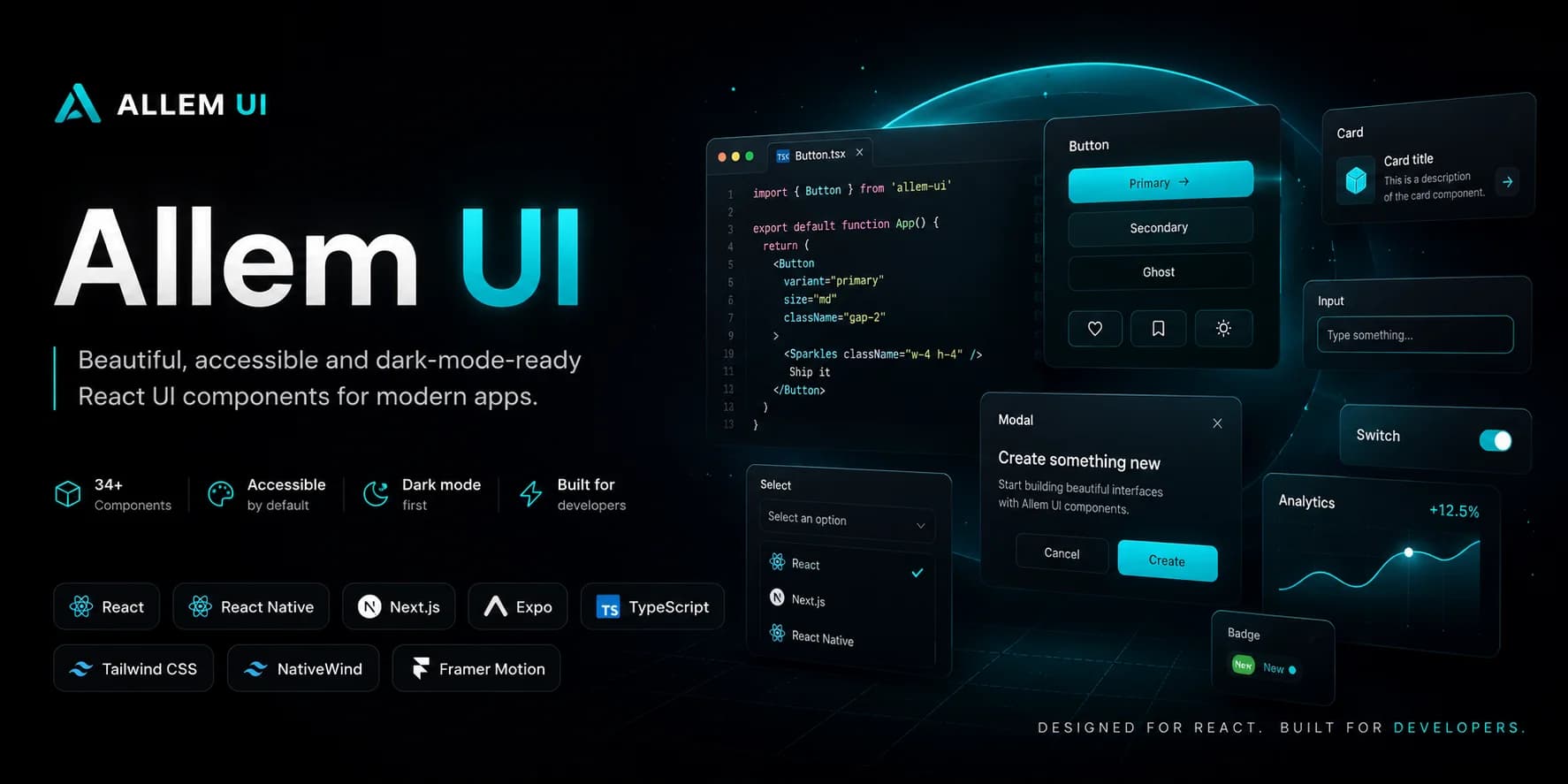
Allem UI is an accessible component library for React and React Native with 44+ components, dark mode, and Tailwind CSS v4. Here is how to install and use it.
In 2026, I launched six AI products across legal tech, travel, healthcare, and developer tools. Here is the architecture and playbook for building in parallel.
I've won 10+ hackathons across 4 countries. The secret isn't coding fast, it's deciding fast. Here's the framework I use every time.
I built an MCP server that lets Claude publish to my blog directly. Here's the full architecture, tools, MongoDB integration, and lessons learned.
MCP servers connect AI models to your real systems - databases, CRMs, deployment pipelines. Here's why I built custom MCP servers and what they changed.
Edge computing with Next.js isn't always faster. Here's where it genuinely helps and where it's counterproductive in production.
Practical Vercel AI SDK patterns for production: streaming responses, tool calling, and structured output that actually parses. From real shipped code.
How I structure a TypeScript monorepo across 9 live products - shared packages, independent deployments, and the patterns that prevent a monolith.
Everyone says to add a vector database to your AI app. But do you actually need one? I tried it in 2 products - one was right, one was overkill.
Next.js auth patterns that survived real users, security scans, and 3 AM incidents - JWT, HTTP-only cookies, and refresh token rotation.
I migrated multiple production apps to the Next.js App Router before it was stable. Here are the real growing pains, the wins, and why I'd do it again.
I'm a developer, not a designer - but I maintain consistent UI across 6 products. Here's how building a design system as a solo founder works with Tailwind.
Translation is only 20% of internationalization. Here's what I learned building for 30+ countries: payments, dates, and culture matter more.
I run 6 production products and each gets its own database, no exceptions. Here's why a database-per-product strategy beats shared infrastructure.
Standard multi-tenant SaaS advice assumes a team. Here's how I approach tenant isolation as a solo founder running multiple products.
Most SEO advice assumes a content team and a budget. Here's what actually moves the needle when you're one person building and writing.
I switched from CSS modules and styled-components to Tailwind CSS across every product. Here's why it eliminated naming decisions.
I've integrated Stripe across 5 products - subscriptions, marketplace payouts, multi-currency. Here are the integration lessons the docs don't teach.
A two-sided marketplace isn't one product, it's two. Here's what Babonbo taught me about balancing supply and demand.
I've deployed on AWS, Heroku, and self-managed VPS. Vercel is the first platform where deployment became invisible. Here's why I moved every product to Vercel.
Converting JavaScript to TypeScript broke everything - temporarily. Six months later it was my best engineering decision. Here's the migration guide I wish I'd had.
Going serverless with Vercel and MongoDB Atlas eliminated an entire category of work. Here's how I ditched SSH and nginx for good.
I've been building products remotely across time zones for years. The tools matter less than the workflows that keep you productive.
Running MongoDB at scale across multiple products taught me hard lessons about indexing, aggregation pipelines, and schema design.
No-code vs code isn't an either/or decision. Here's my framework for when Webflow and Airtable beat custom dev - and when they won't.
I migrated all my products from React + Express to Next.js. One framework for frontend, backend, and deployment transformed my productivity.
API-first design produces cleaner architecture, faster iteration, and products that scale. Here's why I design the API before touching the frontend.
Real-time data pipelines aren't just about speed - they're about staleness, reliability, and trust. Here's what I learned shipping BorderBot's live wait times.
The Node.js and MongoDB stack isn't perfect - it's practical. Here's why I default to this combo for every new product and how it gets me from idea to shipped fast.
Want to win hackathons? It's not about better code - it's about storytelling, scoping, and demo impact. Here's my playbook.
CalHacks at UC Berkeley was the largest hackathon I'd ever attended. 36 hours of building, no sleep, and the most compressed learning experience.
I decided to use JavaScript for everything: frontend, backend, tooling, and scripting. Here's why one language beats 'right tool for the job' for solo builders.
HackIfy was a platform to discover and organize hackathons. It taught me the difference between a project and a product.
My first web app was terrible. Messy code, ugly design, zero users. But it taught me how to ship, the only skill that matters early on.