No-Code vs Code: A Practical Guide for Builders in 2019
No-code vs code isn't an either/or decision. Here's my framework for when Webflow and Airtable beat custom dev - and when they won't.


The no-code movement promises that anyone can build software without writing code. Bubble, Webflow, Airtable, Zapier: powerful tools that let non-developers create functional applications.
As a developer who also uses no-code tools, I have a nuanced view: no-code is powerful for specific purposes and limiting for others. The question isn't "no-code or code?" It's "which parts of this project benefit from which approach?"
When No-Code Wins
Validation. Testing whether an idea has legs before investing weeks of development time. A landing page on Webflow, a form in Typeform, and a database in Airtable can validate demand in a weekend. If nobody signs up, you've saved weeks of development. If people do sign up, you have proof that justifies the custom build.
Internal tools. Admin dashboards, data entry forms, report generators: tools that only you and your team use don't need custom development. Retool, Airtable, and similar platforms handle internal tooling faster and more reliably than custom code for most use cases.
Content sites. Blogs, portfolios, marketing sites: if the primary content is text and images, no-code platforms deliver faster than custom development. Webflow and similar tools produce professional, responsive sites without writing CSS.
Automation. Connecting existing services ("when a new order arrives in Shopify, create a row in Google Sheets and send a Slack notification") is perfectly served by Zapier or Integromat. Writing custom integration code for routine automations is over-engineering.
When Code Wins
Differentiated features. If your product's value comes from unique functionality that no existing platform provides, you need code. Aviation Infinity's adaptive learning engine can't be built in Bubble. ClickAi's AI website generation can't be built in Webflow. The features that make products unique require custom development.
Performance at scale. No-code platforms handle moderate traffic well. High-traffic applications (thousands of concurrent users, complex database queries, real-time features) need custom infrastructure that no-code platforms can't provide.
Complex data models. When the data relationships are complex (many-to-many relationships, polymorphic associations, recursive structures), no-code database tools become limiting. A custom database with proper schema design handles complexity that no-code can't express.
Long-term maintenance. Custom code is owned and controlled. No-code platforms can change pricing, deprecate features, or shut down. For products you'll maintain for years, the control of custom code outweighs the speed of no-code.
My Framework
For every new project, I ask three questions:
- Is this a validation or a product? Validation → no-code. Product → code (mostly).
- Is the value in the functionality or the content? Functionality → code. Content → no-code is fine.
- Will this exist in two years? Yes → code for control. No → no-code for speed.
The answer is sometimes "both." My current approach uses no-code for marketing sites, landing pages, and quick prototypes, while using custom code for the products themselves. The marketing site for a product might be on Webflow while the product itself is custom Next.js.
This hybrid approach gives me the speed of no-code where it matters (marketing, validation) and the power of code where it matters (product, differentiation).
The Real Divide
The no-code vs. code debate misses the real divide: the value is in the decision-making, not the implementation.
Whether you build a product with Bubble or React, the hard decisions are the same: what to build, for whom, and why. The technology choice affects how fast you build, but it doesn't affect whether you're building the right thing.
A developer who builds the wrong product with elegant code has failed just as thoroughly as a no-coder who builds the wrong product with Bubble. The tool doesn't determine the outcome. The judgment does.
I use code because I'm a developer and it's my fastest path. But I respect no-code builders who ship products that serve users. The end result is what matters, not the implementation path.
Enjoyed this article?
I write about building products, AI, aviation, and the journey of entrepreneurship. Follow along for more.
Keep reading

Getting Started with Allem SDK: React Hooks for AI, Forms & Auth
Allem SDK is a collection of React hooks for AI chat, form validation, authentication, analytics, and utilities. Here is how to install and use it.

Getting Started with Allem UI: React & React Native Components
Allem UI is an accessible component library for React and React Native with 44+ components, dark mode, and Tailwind CSS v4. Here is how to install and use it.
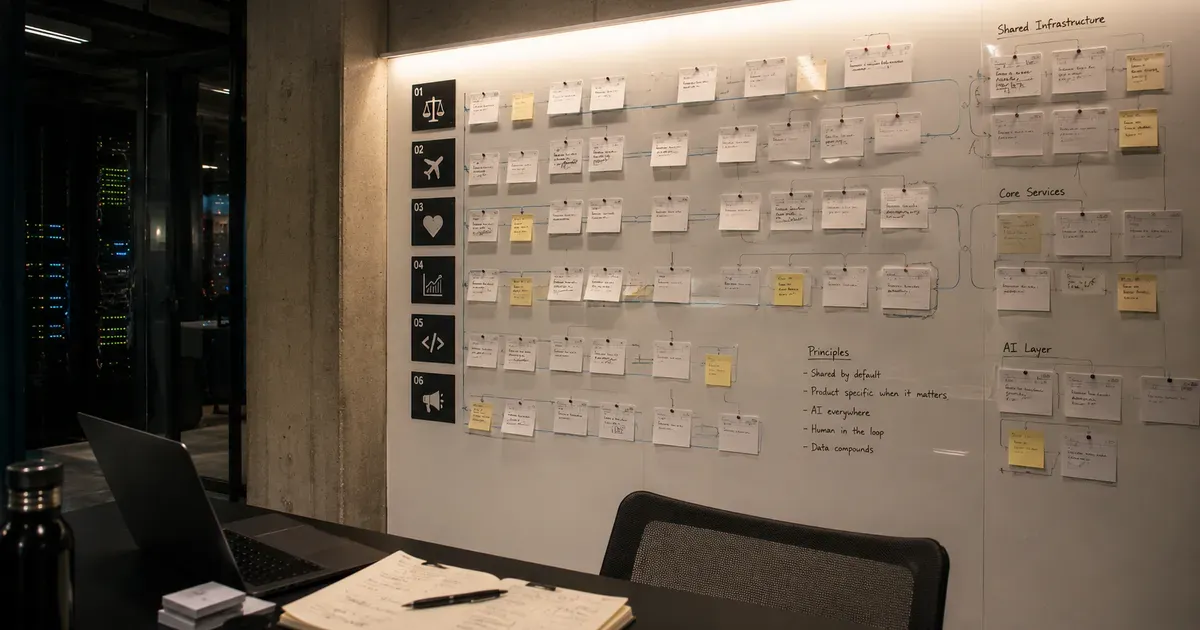
The Agento Suite: Building 6 AI Products in Parallel
In 2026, I launched six AI products across legal tech, travel, healthcare, and developer tools. Here is the architecture and playbook for building in parallel.