Case studies

Avioyx
Aviation OS


ClickAi
AI Web Builder

Surfyx
Sport Intelligence

Babonbo
Family Travel Marketplace

PowerAgento
Venture OS

TravelAgento
AI Travel

CodeAgento
Developer Platform

LegalAgento
Legal AI

MedAgento
Healthcare OS

Bocads
Ad Tech OS
BorderBot
Border Wait Times
Cal Hacks
Hackathon Mentorship
HackIfy.io
Binational Hackathon

Comensalaqui
Food Marketplace

Aviation Infinity
AI Flight Academy

Want To Be a Pilot
Aviation Mentorship

AvioSharing
Flight Sharing

New Pilot Shop
Aviation Supplies
Case study
Cal Hacks
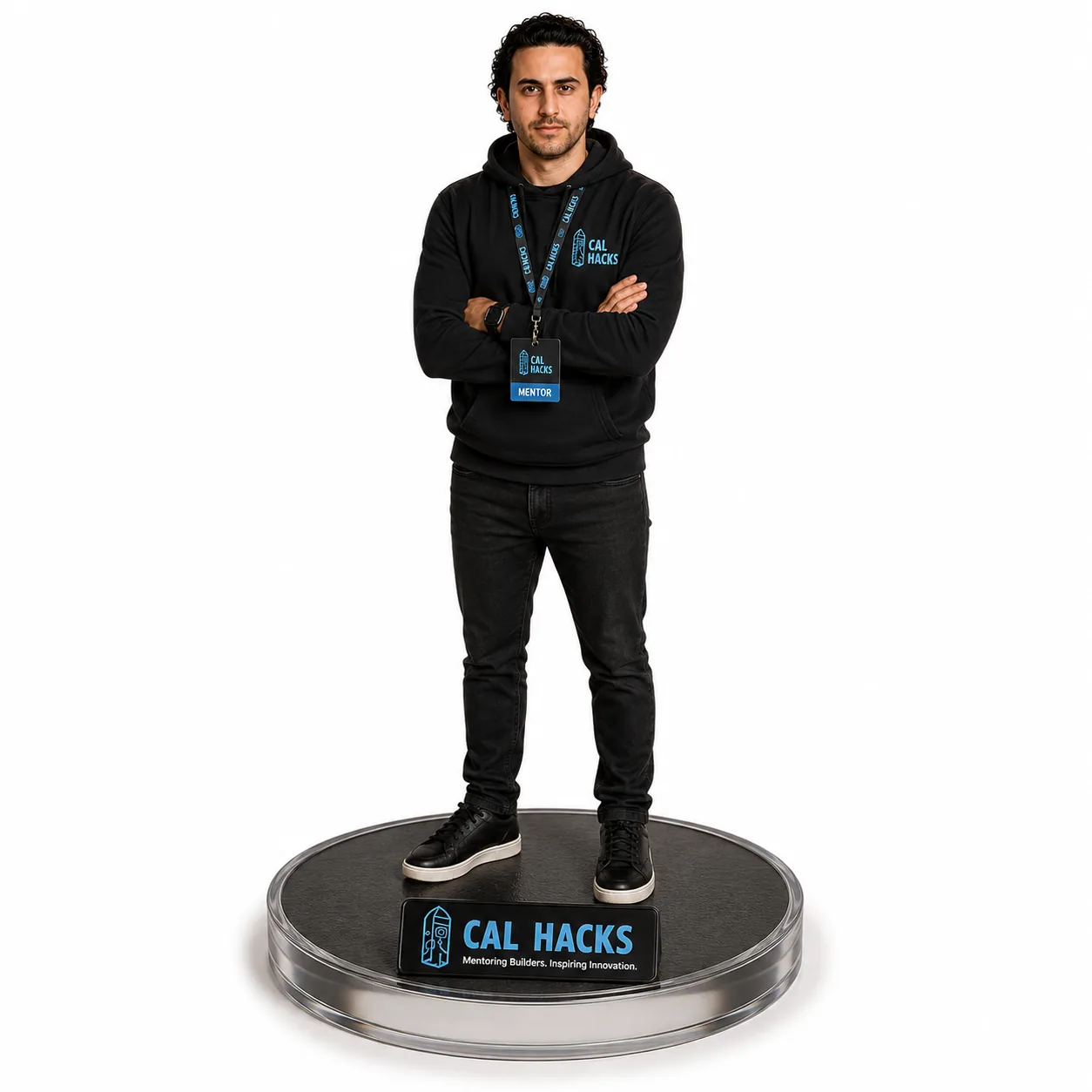
Hacker, mentor, and judge at Cal Hacks, UC Berkeley's flagship hackathon and one of the largest collegiate hackathons in the world.
Cal Hacks is UC Berkeley's flagship hackathon and one of the largest collegiate hackathons in the world. Thousands of students from Berkeley, Stanford, MIT, and universities across the country come together for a 36-hour sprint to build something from scratch.
I first participated as a hacker, competing alongside other builders and shipping a working product in 36 hours. That experience led to an invitation to come back as a mentor for three editions. I walked the floor, sat with teams, and helped them turn half-formed ideas into working prototypes before the deadline. Most teams I worked with were building AI products: chatbots, recommendation engines, computer vision tools, and NLP projects. I helped them figure out what was actually buildable in 36 hours, pick the right approach, and avoid the traps that kill hackathon projects (scope creep, broken APIs, spending 20 hours on auth).
For the last two editions, I was invited back as a judge. Evaluating final presentations, scoring projects on technical execution, creativity, and real-world impact, and deciding which teams take home the prizes. Going from hacker to mentor to judge over multiple years gave me a unique perspective on what separates winning projects from the rest.
I also ran workshops on product thinking and startup strategy during my mentor editions. A lot of hackathon teams build cool demos but can't explain why anyone would use them. I helped teams frame their projects as real products with a target user, a clear problem, and a pitch that judges could understand in 60 seconds.
Cal Hacks is organized by UC Berkeley students and sponsored by companies like Google, Microsoft, and Meta. Being part of it across multiple roles over the years has been one of the highlights of my time in the Bay Area.
I first participated as a hacker, competing alongside other builders and shipping a working product in 36 hours. That experience led to an invitation to come back as a mentor for three editions. I walked the floor, sat with teams, and helped them turn half-formed ideas into working prototypes before the deadline. Most teams I worked with were building AI products: chatbots, recommendation engines, computer vision tools, and NLP projects. I helped them figure out what was actually buildable in 36 hours, pick the right approach, and avoid the traps that kill hackathon projects (scope creep, broken APIs, spending 20 hours on auth).
For the last two editions, I was invited back as a judge. Evaluating final presentations, scoring projects on technical execution, creativity, and real-world impact, and deciding which teams take home the prizes. Going from hacker to mentor to judge over multiple years gave me a unique perspective on what separates winning projects from the rest.
I also ran workshops on product thinking and startup strategy during my mentor editions. A lot of hackathon teams build cool demos but can't explain why anyone would use them. I helped teams frame their projects as real products with a target user, a clear problem, and a pitch that judges could understand in 60 seconds.
Cal Hacks is organized by UC Berkeley students and sponsored by companies like Google, Microsoft, and Meta. Being part of it across multiple roles over the years has been one of the highlights of my time in the Bay Area.